Book Review: Japan and the Shackles of the Past – A Necessary and Unflinching Look
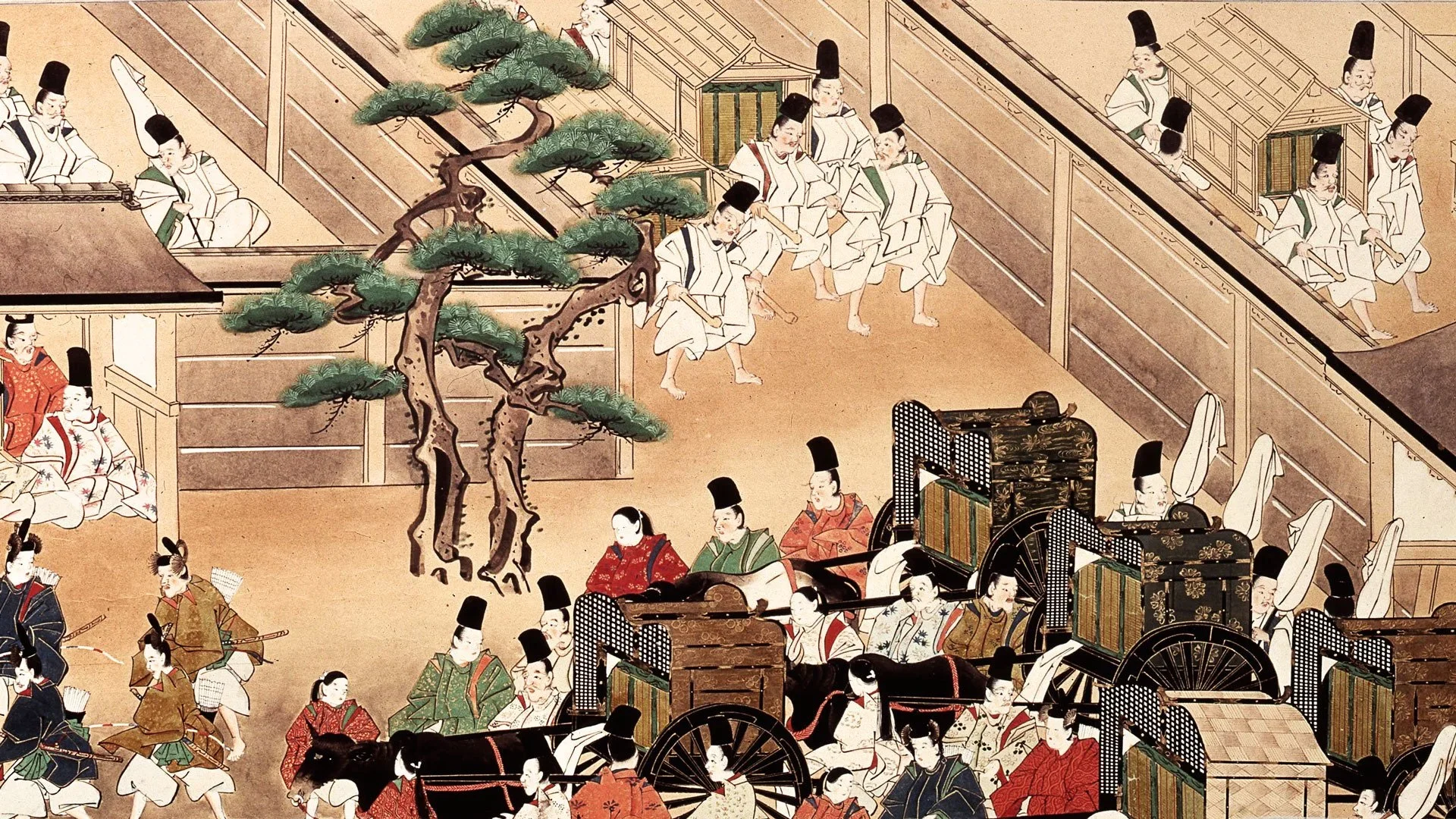
Traditional depiction of Japan's institutional elite, linking back to the Tokugawa period power structures.
Japan's modernization is "uneven," haunted by ancient elites and cultural "magic realism." This book reveals the hidden truth.
Navigating 'Magic Realism': Why Contradictions Rule Japan's Political Landscape.
Taggart Murphy’s Japan and the Shackles of the Past is not an easy book, but it is a necessary one. For those of us who have spent years navigating the layers of Japanese society—from seasoned Japanologists and foreign journalists to senior business people—this book offers the kind of deeper understanding that moves past surface-level observations. It’s a work that allows you to genuinely shine at dinner parties with insight, not just anecdote.
Murphy is neither a Japan basher nor an apologist. He is, to put it simply, a Japan lover, and his work is imbued with the kind of passion, sympathy, and, crucially, clear-eyed disillusionment that true affection brings.
The Core Argument: Uneven Modernity and Enduring Elites
Murphy’s central, compelling argument is that Japan’s modernization has been profoundly uneven. While the nation achieved extraordinary strength economically, its social and political development has lagged, remaining comparatively weak. He convincingly draws a direct line from today’s secretive, self-selecting, and often corrupt institutional elite all the way back to the Tokugawa period and even further.
Crucially, Murphy blames a cultural phenomenon he calls ‘magic realism’. In Japan, perfectly normal, rational things occur right alongside deeply strange things, yet everyone is too polite—or perhaps too culturally conditioned—to point out the contradiction. This quiet acceptance of dissonance, this ability to hold two completely contradictory ideas in one's head, is a key to understanding the nation’s systemic inertia.
History, Politics, and Economics
South Korean flag in an urban setting, relevant to the book's discussion of Japan's complex historical issues with its neighbors.
One of the book's greatest strengths is Murphy's vivid treatment of Japanese history and culture from its earliest times. His perspective is shrewd and novel on a host of enduring controversies that characterize modern Japan, whether the Peace Constitution, political corruption, the complex relationship with China and South Korea, or the historical issues of Comfort Women and World War 2.
His coverage of recent politics is particularly good. For instance, his analysis of the implosion of the DPJ (Democratic Party of Japan) is excellent, even touching upon the alleged malign US influence that has shaped Japanese political life—including the CIA’s role in setting up the reactionary LDP (Liberal Democratic Party) in the 1950s.
On business and finance, the book covers some well-trodden ground, such as the paradox of Japan’s manufacturing Hidden Champions and their failure to achieve dynamism levels seen in the US or Germany. While some of his economic interpretations echo the arguments of others, the political and historical depth remains undeniably valuable.
The Verdict
Overall, Murphy has penned a perceptive, useful, but perhaps slightly conventional book in the tradition of Karel van Wolferen. Yet, when enjoying his brilliant handling of topics like history, sexuality, and art, I couldn’t help but feel we missed out on an even better, less conventional book focusing squarely on those areas—a true successor to the cultural insights of a Donald Richie. We are, after all, snowed under by books on Japanese finance and economics.
Nevertheless, Japan and the Shackles of the Past is a thorough and meaty contribution, providing indispensable context for anyone seeking to understand the deep roots of Japan’s modern dilemmas.